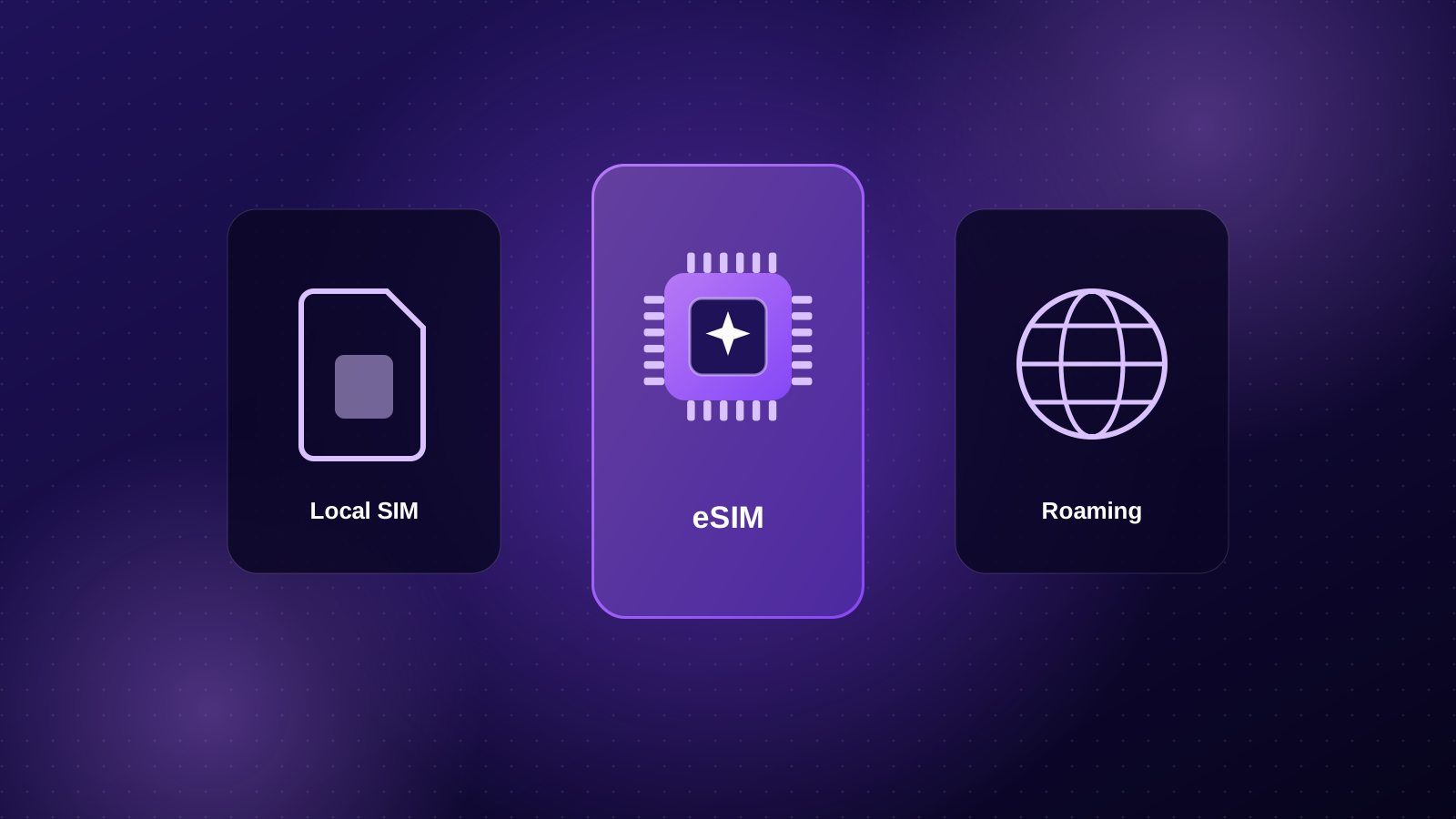
There are three main ways to stay connected abroad: use your home carrier's international roaming, buy a local SIM when you arrive, or install a travel eSIM before you go. Each has its place. Here's how they compare.
At a glance
| Travel eSIM | Home roaming | Local SIM | |
|---|---|---|---|
| Setup | Install at home in minutes | Nothing to set up | Find a shop or kiosk on arrival |
| Online when you land | Yes | Yes | Only after you buy one |
| Cost | Fixed price, paid upfront | Often charged per day, or per MB | Usually cheap, but varies |
| Keeps your home number | Yes, alongside your SIM | Yes | Only on dual-SIM phones |
| Several countries | Yes, with a regional plan | Yes | One country per SIM |
| Local phone number | No (data-only) | No | Usually yes |
International roaming: easy, but it adds up
Roaming means using your home SIM overseas, with your carrier charging you for it.
The good: nothing to set up. Your number, texts and data all keep working.
The catch: cost. Many carriers charge a daily fee for roaming, which adds up over a two- or three-week trip, and pay-as-you-go roaming without a pass can be very expensive per megabyte. Check your carrier's current rates before you travel.
Best for: very short trips, or travellers whose phone plan already includes generous roaming.
Local SIM: cheap data, more effort
A local SIM is a prepaid card from a network in the country you're visiting.
The good: often good value, and you may get a local number.
The catch: you need to find a shop or airport kiosk after a long flight, and many countries require passport registration. You'll usually need to swap out your home SIM (unless you have a dual-SIM phone), so you may miss calls or bank SMS codes. On multi-country trips you need a new SIM in each country.
Best for: long stays in one country, or when you need a local phone number.
Travel eSIM: the convenient middle ground
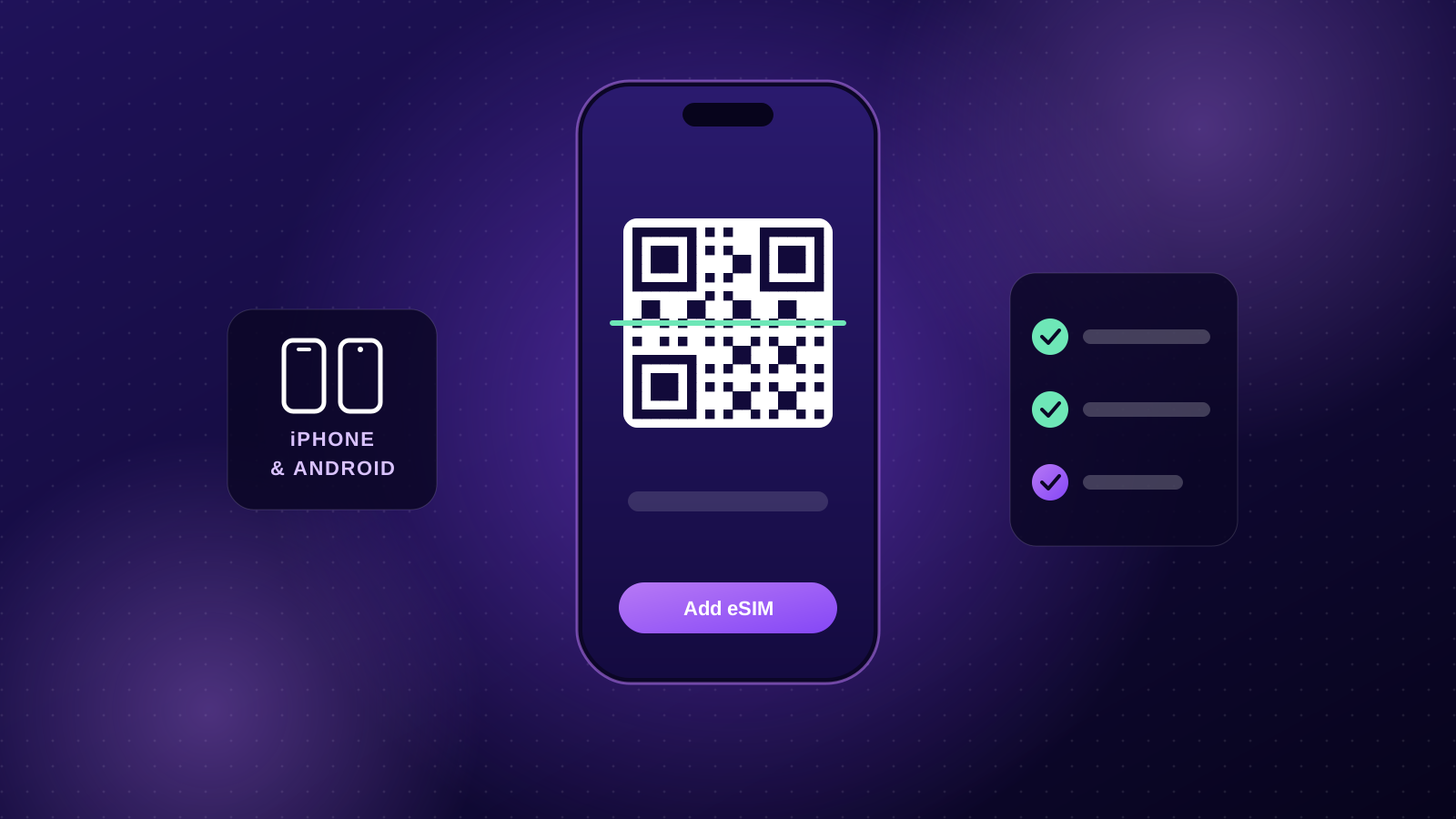
A travel eSIM is a data plan you buy online and install by QR code before you leave.
The good:
- You're online as you land, before passport control, so you can message your hotel or book a ride straight away.
- Fixed, upfront price. No daily fees, no bill shock.
- Your home SIM stays in place for calls and texts.
- One plan for many countries. Regional plans cover places like Europe or Southeast Asia and switch networks automatically as you cross borders.
The catch: eSIMStar plans are data-only, so there's no local number. Calls and messages over WhatsApp, iMessage or FaceTime work as normal. Your phone also needs to support eSIM and be unlocked. Here's how to check.
Best for: most trips, especially multi-country itineraries and anyone who wants to land connected.
Which should I choose?
- Weekend away, roaming already in your plan: roaming is fine.
- Three months in one country and you need a local number: a local SIM makes sense.
- Almost everything else: a travel eSIM is the simplest, most predictable option.
Tip: Whatever you choose, turn off data roaming on your home SIM if you're using an eSIM or local SIM for data. It stops your phone quietly using expensive roaming in the background.